
RICS Valuation vs a Building Survey: What's the Difference?
If you are buying a property in Sunderland, Newcastle, Durham or anywhere else in the North East, you have probably been told that your mortgage lender will arrange a valuation before your mortgage is approved. It is easy to assume this valuation does the same job as a proper survey. It does not, and this misunderstanding is one of the most common, and potentially most costly, mistakes a home buyer can make.
At Survey North, we are asked almost every week whether a buyer really needs their own survey when the bank has already sent someone to look at the property. The short answer is yes, and the reasons come down to who each report is really for, how thorough it is, and what it is actually designed to find.
In this guide, we explain what a mortgage valuation involves, what a RICS building survey actually covers, and how to work out which level of survey is right for your property before you commit to a purchase.
Key Takeaways
- A mortgage valuation is arranged for your lender's benefit, not yours, and does not check the property's condition in any real detail.
- A RICS building survey is an independent, in-depth inspection that you commission for your own protection.
- RICS surveys come in three levels, Level 1, Level 2 and Level 3, each suited to a different type and condition of property.
- Level 3 (a full building survey) is best for older, larger, unusual or renovated properties, while Level 2 usually suits conventional homes in reasonable condition.
- You can commission a survey and a separate valuation from Survey North if you need both a condition report and confirmation of market value.
- Relying on a mortgage valuation alone can leave serious and expensive defects undiscovered until after you have exchanged contracts.
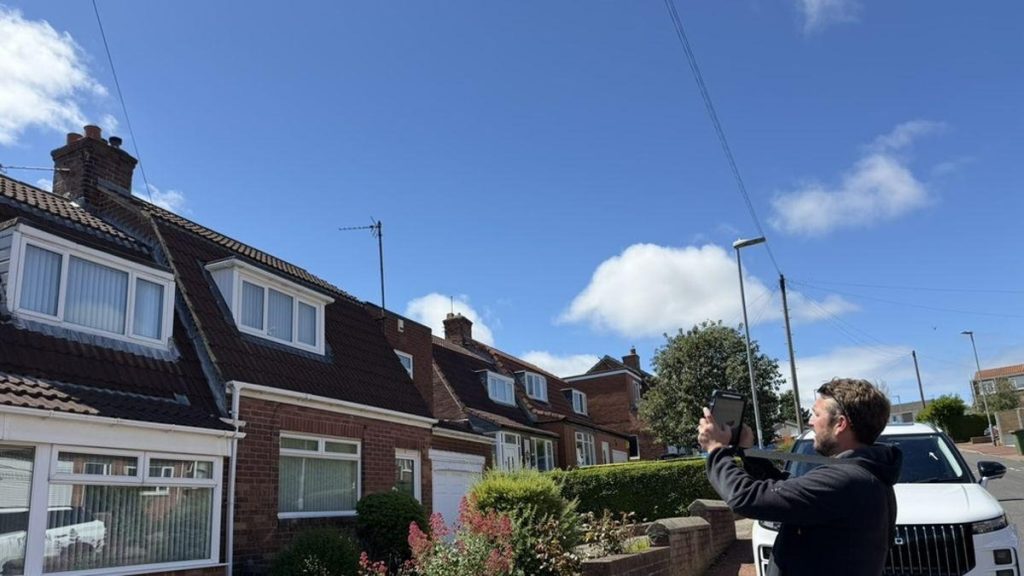
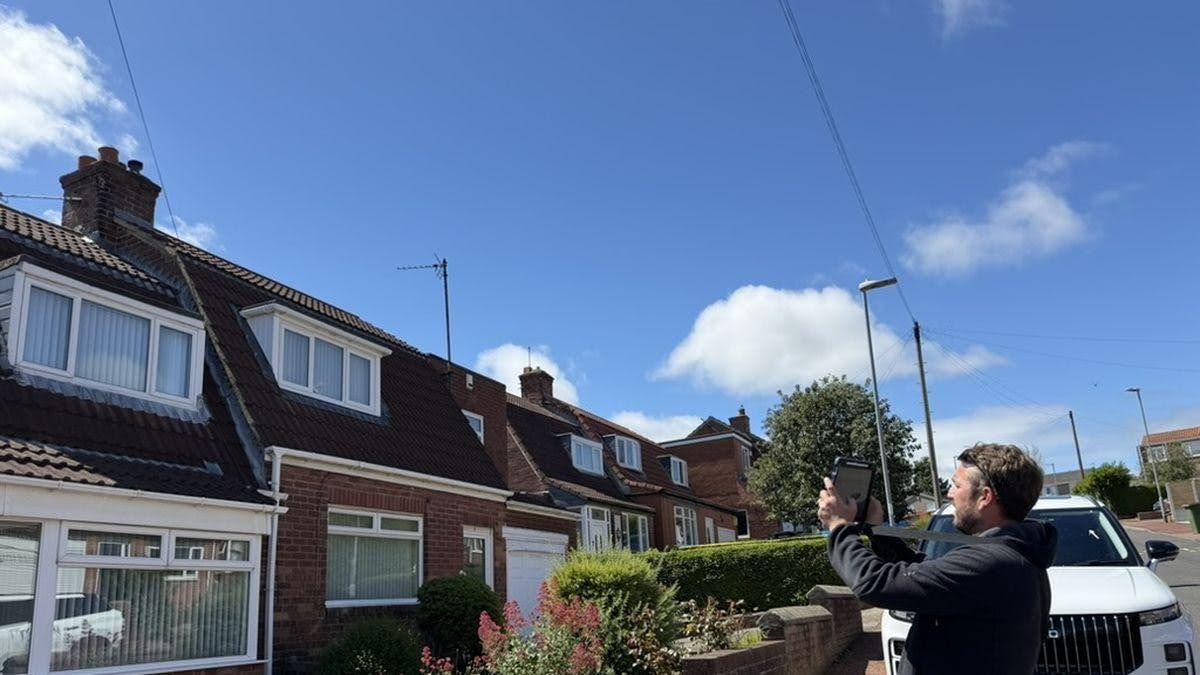
A Survey North surveyor carrying out an external elevation inspection of a North East property.
Why Buyers Confuse a Valuation With a Survey
The confusion is understandable. Both a mortgage valuation and a RICS survey usually involve someone visiting the property, and both can result in a document with the word "valuation" somewhere in it. But the two exist for completely different reasons.
A mortgage valuation is carried out on behalf of your lender, purely to confirm the property is worth enough to secure the loan against. As the independent consumer body Which? explains, a mortgage valuation "is not the same as a house survey", is often a brief visit, and sometimes does not even involve anyone stepping inside the property. You may never see the report, because it is written for the lender, not for you.
A RICS survey, on the other hand, is commissioned by you, the buyer, specifically to assess the condition of the property you are about to buy. It is carried out by a qualified surveyor who reports directly to you, in plain English, on exactly what they find.
What Does a Mortgage Valuation Actually Involve?
A mortgage valuation is arranged automatically as part of most mortgage applications. The surveyor instructed by the lender is checking one thing above all else, whether the property offers enough security for the amount being borrowed. Their visit is typically quick, focused on comparable sale prices in the area, and not intended to identify hidden defects, damp, subsidence or repair costs.
This means a property can pass its mortgage valuation without any issue, while still having serious problems that only a proper inspection would uncover. If a lender's valuer does flag a concern, it is usually about their own risk on the loan, not about protecting your interests as the buyer.
What Does a RICS Building Survey Actually Cover?
A RICS survey is a structured, independent inspection carried out under the RICS Home Survey Standard, the framework every RICS-regulated surveyor must follow. There are three recognised levels of survey, and choosing the right one depends on the age, condition and type of property you are buying.
RICS Home Survey Level 1 (Condition Report)
A Level 1 survey is the most basic option, suited to conventional, newer properties in good condition. It provides a summary of the property's condition using a simple traffic light rating system, and flags major or urgent issues, but it does not go into detailed advice or investigation.
RICS Home Survey Level 2 (HomeBuyer Report)
A Level 2 survey is the most popular choice for conventional properties in reasonable condition. It goes further than a Level 1 report, identifying defects such as damp or early signs of movement, giving repair and maintenance advice, and, if requested, providing a market valuation and reinstatement cost for insurance purposes.
RICS Home Survey Level 3 (Building Survey)
A Level 3 survey, previously known as a full Building Survey, is the most thorough option available. It is designed for older, larger, unusual or altered properties, or homes that are visibly in poorer condition. A Level 3 survey provides a detailed, room by room inspection of every accessible area, identifies structural issues and defects, and gives clear advice on necessary repairs, likely costs and long term maintenance. It does not usually include a market valuation, though this can be added as a separate service if you need one.
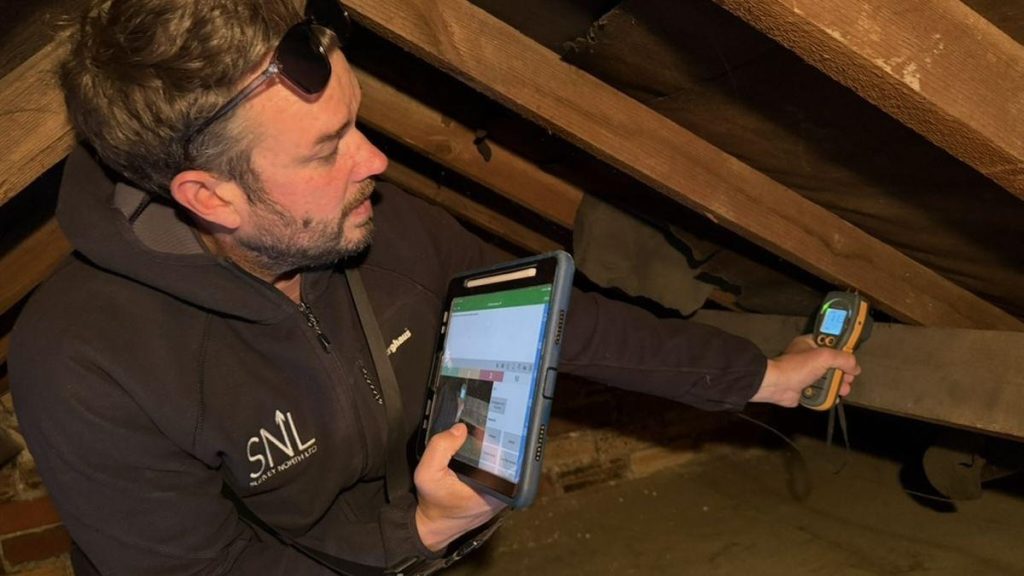
A Survey North surveyor inspecting a roof void and checking timber moisture as part of a Level 3 building survey.
Quick Comparison: Valuation vs Building Survey
It can help to see the two side by side. Here is how a typical mortgage valuation compares with a RICS Level 3 building survey.
- Who it is for: a mortgage valuation protects the lender, a building survey protects you, the buyer.
- What it checks: a valuation checks the property is worth enough to secure the loan, a survey checks the physical condition of the building.
- Who sees the report: the lender usually keeps the valuation, while a survey report is written for you in full.
- Depth of inspection: a valuation visit can be very brief, while a Level 3 survey typically takes several hours on site.
- Outcome: a valuation can lead to a down valuation on your mortgage offer, while a survey gives you a list of defects, risks and repair advice you can act on or negotiate with.
Why a Valuation Alone Is Not Enough
Because a mortgage valuation is not designed to inspect the building fabric closely, it can easily miss the kind of issues that cost thousands of pounds to put right. Damp penetrating through brickwork, blocked or damaged airbricks, movement in walls, and timber decay in a roof void are all the sort of defects a Level 2 or Level 3 survey is specifically designed to catch.
This is why we always recommend commissioning your own survey, even if your lender's valuation has already come back with no concerns. A property can look sound from a lender's perspective while still hiding problems that only a hands-on inspection, checking brickwork, airbricks, roof timbers and damp-prone areas, would reveal.
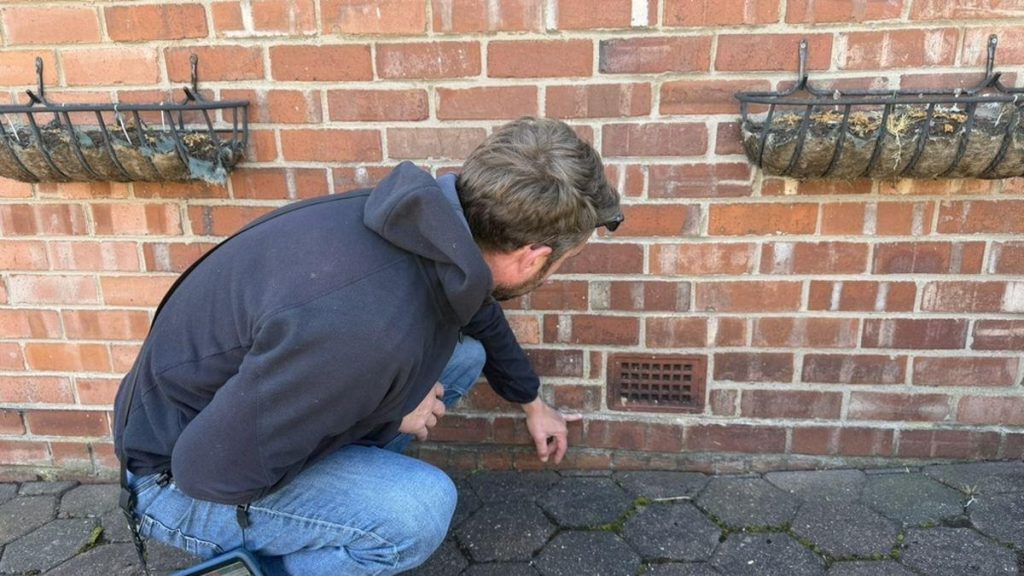
A Survey North surveyor closely inspecting brickwork and an airbrick for signs of damp and ventilation issues.
When You Might Want Both a Survey and a Separate Valuation
A survey and a valuation are not mutually exclusive. There are plenty of situations where you might want both, and Survey North offers a dedicated property valuation service alongside our survey work. Our RICS Registered Valuers provide independent valuations for residential and commercial sales or purchases, mortgage and re-mortgage applications, investment planning and portfolio management, probate, inheritance tax or divorce settlements, and Help to Buy.
If you are remortgaging an older property, for example, you may want both a Level 3 building survey to understand its condition and a separate, independent valuation to confirm its market value, rather than relying solely on your lender's own figure.
Which Level of Survey Is Right for Your Property?
As a general rule, a conventional, well-maintained property that is relatively modern is often well served by a Level 2 HomeBuyer Report. Older, larger, non-standard or visibly altered properties, or anything you are planning to renovate, are much better suited to a full Level 3 RICS building survey. Our detailed Level 2 vs Level 3 comparison guide covers this decision in more depth if you are still unsure which report fits your property.
It is also worth reading our roundup of five reasons to get a homebuyer survey and our piece busting some of the most common survey myths, both of which explain why skipping an independent survey rarely pays off in the long run.
If your property falls into a more specialist category, perhaps you need a drainage inspection, a damp survey, or a drone survey of an inaccessible roof, take a look at our specialist survey services for the full range of options available across Sunderland, Durham, Newcastle and the wider North East.
How Survey North Can Help
Survey North is a RICS-regulated practice with more than fifty years of combined experience in the building industry, covering Washington, North Shields, South Shields, Newcastle upon Tyne, Blyth, Sunderland and the wider North East. Whether you need a Level 2 HomeBuyer Report, a full Level 3 building survey, or an independent valuation from a RICS Registered Valuer, our team will give you a clear, honest picture of the property before you commit to buying it. You can see the full range of RICS surveys and valuations we offer, or get in touch directly for advice on the right option for your property.
You can reach us on 0191 574 0167, by emailing info@surveynorth.co.uk, or by requesting a free quote online and we will come back to you promptly.
Frequently Asked Questions
Can I just rely on my mortgage valuation instead of getting my own survey?
No. A mortgage valuation is carried out for your lender's benefit and only confirms the property is worth enough to secure the loan. It is not a check of the property's condition, and you may never see the report yourself. A RICS survey is the only way to get an independent, detailed assessment commissioned specifically for you.
What level of survey do I need for an older property?
Older, larger or non-standard properties, or homes you are planning to renovate, are generally best matched to a Level 3 building survey. It provides a far more detailed inspection than a Level 2 report and is designed with exactly these types of properties in mind.
Can Survey North provide both a survey and a separate valuation?
Yes. Alongside our RICS surveys, our RICS Registered Valuers offer independent valuations for sales, purchases, remortgaging, probate, inheritance tax, divorce settlements and Help to Buy, so you can commission both a condition report and a market valuation if you need them.
How long does a building survey take and when will I get my report?
A Level 3 building survey typically takes around four to six hours on site, depending on the size of the property, compared with two to four hours for a Level 2 HomeBuyer Report. Reports are usually delivered within three to five working days, with a maximum of seven working days as required by RICS.