
New Build Snagging Survey: What It Covers and Why It Is Worth Doing
Collecting the keys to a brand new home is one of the most exciting moments in buying a property. It is easy to assume that because everything is new, everything must be perfect. In practice, new-build homes are finished to a deadline by dozens of different trades, and small defects, and occasionally serious ones, slip through even on well-run developments.
A snagging survey is how you catch those issues while they are still easy to fix. At Survey North, we carry out independent snagging surveys across the North East, and in this guide we explain exactly what one covers, when to book it, and why it is worth doing even though your new home already comes with a builder's warranty.
Key Takeaways
- A snagging survey is an independent inspection of a new-build home that identifies defects, poor workmanship or incomplete finishes before or shortly after you move in.
- New-build warranties typically run for 10 years, but only the first two are the builder's direct responsibility to put things right, so early, documented reporting matters.
- Snags range from minor cosmetic issues, such as paint or sealant, through to more serious concerns like poor insulation, leaks or structural detailing.
- An independent report gives you evidence to put to your developer, rather than relying on your own list of things that look wrong.
- The earlier a defect is identified and reported, the easier it usually is to get the builder to resolve it under warranty.
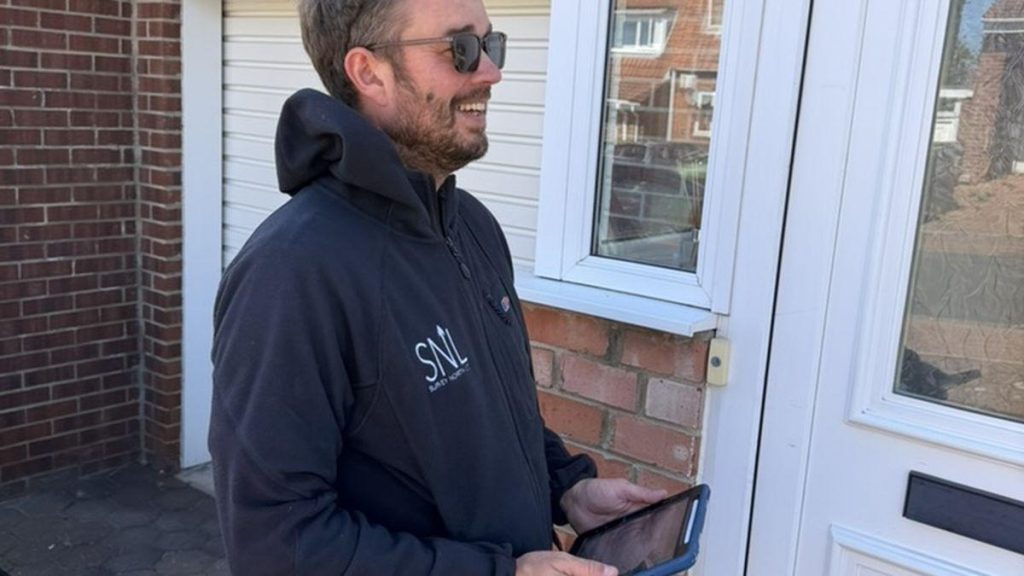
A Survey North surveyor arriving to carry out a new-build inspection.
Why New Builds Still Need Checking
It is a common myth that a brand new property does not need any kind of survey. As we cover in our piece on common surveying myths, new-build homes are built quickly, often by several subcontractors working to a completion date, and that pace is exactly why finishing details get missed. A mortgage valuation will not check any of this, and a warranty only helps once a problem has already been formally reported.
Older, unusual or altered properties are generally better suited to a full Level 3 building survey. New builds have a different risk profile: the structure itself is unlikely to be defective, but the finishing, fixtures and small details very often are. A snagging survey is built specifically around that difference.
What Is a Snagging Survey?
A snagging survey is a detailed inspection of a new-build property carried out to identify defects, poor workmanship or incomplete finishes, commonly known as "snags". These range from minor cosmetic issues to more serious concerns, and the inspection results in a written report you can put directly to your builder or developer.
What Does a Snagging Survey Actually Check?
A thorough snagging inspection works through the property systematically, covering the internal finishes, such as walls, ceilings and floors, alongside windows, doors and external areas. Every room is checked in turn, along with the fixtures and fittings a builder is responsible for getting right.
Fixtures and fittings are one of the most common sources of snags. Taps that do not run properly, doors that do not close square, sockets fitted at the wrong height, and sealant that has already failed are all typical findings on a new-build inspection, and are exactly the kind of detail that is easy to miss when you are focused on moving boxes in.
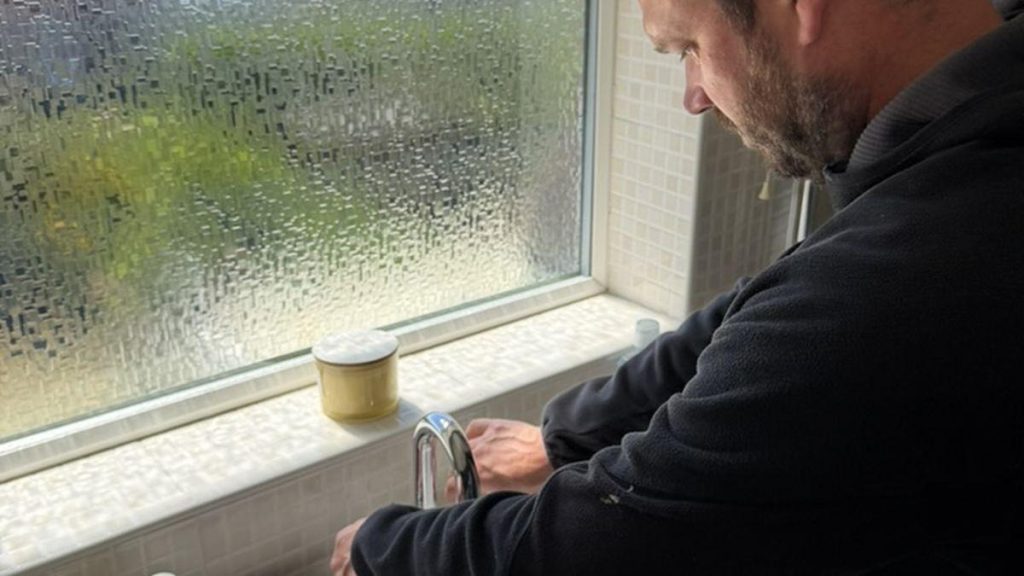
Checking fixtures and fittings, such as taps and seals, is a routine part of a snagging inspection.
A typical inspection works through the property area by area, so nothing gets overlooked simply because it is out of the way or easy to miss on a quick walk-round. That usually includes:
- Internal finishes and decoration, including walls, ceilings, floors and paintwork
- Windows and doors, checking they open, close and lock properly and are free of gaps or draughts
- Fixtures and fittings, such as taps, sockets, switches, handles and hinges
- The roof space or loft, where safe and reasonable access allows
- External areas, including brickwork, pointing, guttering, driveways and boundary treatments
- Basic health and safety items, such as smoke alarms and any obvious trip hazards
The Two-Year Window That Matters
Most new-build warranties run for 10 years, but the two halves of that cover work very differently. As NHBC's own guidance explains, during the first two years it is the builder, not the warranty provider, who is responsible for putting right anything that falls short of the required standard. Homeowners are expected to contact the builder as soon as reasonably possible and to keep the issue on record, because that early window is when defects are simplest to escalate.
After the first two years, structural insurance cover narrows considerably, typically to major items such as foundations, load-bearing walls, roofs and chimneys. Cosmetic and workmanship snags picked up later than that are far harder to get resolved, which is exactly why an independent inspection soon after moving in is worth having rather than waiting to see what turns up.
Why an Independent Survey Beats a DIY Snagging List
Plenty of new homeowners try to snag their own property using an online checklist. The problem is not effort, it is expertise. As the HomeOwners Alliance points out, a warranty does not cover everything, and a professional snagging survey "could help apply pressure on your builder to sort defects" precisely because it carries the weight of an independent, written assessment rather than a homeowner's own list.
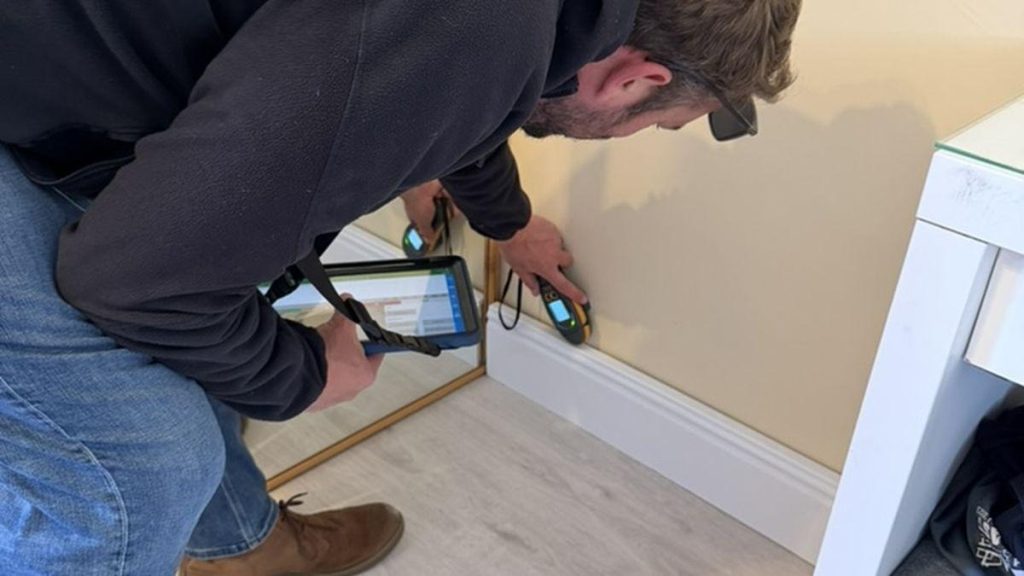
A close, methodical check of finishes and detailing, such as skirting boards and wall junctions, during a snagging inspection.
A trained eye catches things an untrained one does not, whether that is a skirting board fitted with a visible gap, a damp reading behind a newly plastered wall, or a door that has been hung slightly out of true. A written, dated report also gives you something concrete to hand to your developer, rather than a conversation they can dispute.
When to Get a Snagging Survey
Ideally, a snagging survey is carried out shortly after legal completion, while the property is still well within the builder's initial responsibility period and before you have settled in and stopped noticing the small things. Some buyers also choose a second check closer to the end of the two-year period, to catch anything that has developed since moving in, such as sealant failing or minor cracking as the building settles.
What Happens After Your Snagging Survey
Once the inspection is complete, you are given a written report setting out every defect found, with its location and a description clear enough for you or your builder to act on. From there, the report is yours to use as you see fit, most commonly by sending it straight to your developer's customer care team and asking for a timeframe to put each item right.
Keeping a dated copy of the report, along with any replies from the builder, matters if an issue takes longer than expected to resolve or needs to be escalated later in the warranty period. Some homeowners also find it useful to book a second, shorter check nearer the end of the two-year period, to pick up anything that has appeared since the snagging report was first issued.
How Survey North Can Help
Survey North provides expert snagging surveys for new-build homes across Sunderland, Durham, Newcastle and the wider North East, carried out by a RICS-regulated practice with more than fifty years of combined experience in the building industry. We check your new home thoroughly and provide a clear report you can use to get any issues resolved by your builder with confidence.
If your new home is an older or converted property rather than a fresh build, a Level 3 building survey is usually the better fit. Our guide to whether you need a Level 3 survey for an older property and our breakdown of what a Level 3 building survey costs in 2026 both cover that in more depth. You can see the full range of RICS surveys and valuations we offer, or read our roundup of five reasons to get a homebuyer survey if you are still weighing up your options.
You can reach us on 0191 574 0167, by emailing info@surveynorth.co.uk, or by requesting a free quote online and we will come back to you promptly.
Frequently Asked Questions
Do I really need a snagging survey if my new build already has a warranty?
Yes. A warranty only helps once a defect has been formally reported, and during the first two years it is the builder, not the warranty provider, who is responsible for fixing problems. A snagging survey gives you an independent, documented list of issues so you can report them promptly and with evidence.
How soon after moving in should I get a snagging survey?
As soon as reasonably possible after legal completion, and always within the builder's warranty period. Early reporting makes it far easier to get defects resolved, and some buyers also arrange a second check closer to the end of the two-year period to catch anything that has developed since moving in.
Does Survey North fix the defects found in a snagging survey?
No, we identify and report them. Our snagging survey provides a clear, written report of every defect found, which you then take to your builder or developer to have repaired under your warranty or customer care agreement.
Does Survey North cover new builds across the North East?
Yes. We carry out snagging surveys on new-build properties across Sunderland, Durham, Newcastle upon Tyne and the wider North East, alongside our full range of RICS surveys and valuations.
What happens once my snagging report is ready?
You receive a written report listing every defect found, with its location and a clear description. Most homeowners send this straight to their developer's customer care team and ask for a timeframe to have each item put right, keeping the dated report on file in case anything needs to be followed up later in the warranty period.